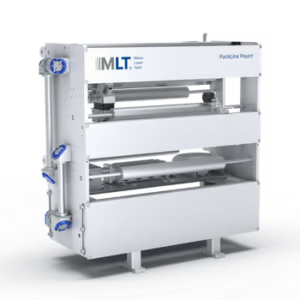
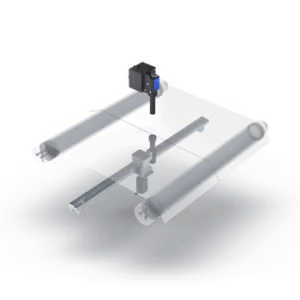
MLT Laser Systems for the Packaging Industry
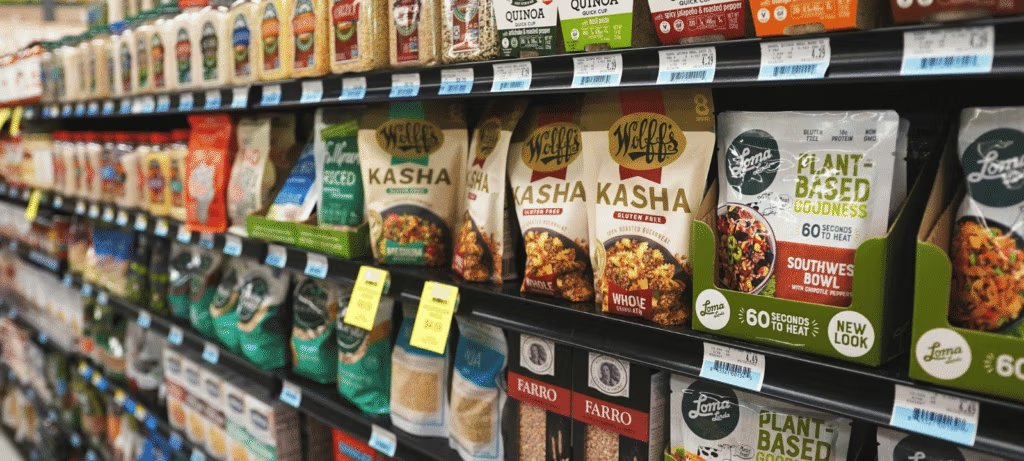
Driven by new materials, shorter product life cycles, smaller batch sizes, and increasing quality requirements, the packaging industry is facing growing pressure to innovate.
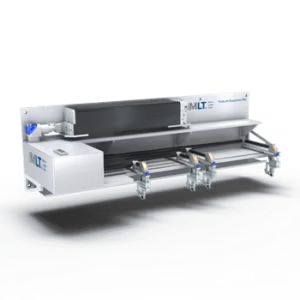
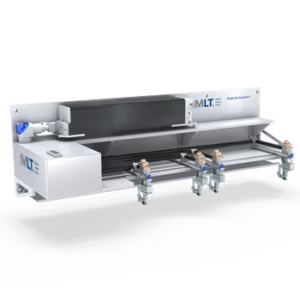
MLT laser systems help manufacturers address these challenges efficiently and cost-effectively. The non-contact processing technology delivers highly precise results – even on sensitive or sustainable materials – while reducing wear, setup times, and waste.
Typical Applications for Laser Systems in the Packaging Industry
Benefits of MLT Laser Systems for the Packaging Industry
Maximum precision at high speeds
Wear-free technology
Maximum design flexibility
Cost-effective process optimization
Learn more ➔
Reduced waste, minimal downtime, and faster changeovers help increase overall productivity.
Seamless inline integration
Learn more ➔
Laser systems can be integrated effortlessly into existing production and printing lines, including Industry 4.0 connectivity and interfaces.
MLT Laser Systems for the Packaging Industry
Shaping the Future of Packaging with MLT Laser Systems
Would you like to learn how laser systems can make your packaging processes more efficient and enhance the performance of your products?
Talk to our experts. Together, we will analyze your application requirements and develop the right solution for your production environment.
Frequently Asked Questions (FAQs)
What are laser systems for the packaging industry?
Laser systems for the packaging industry are industrial solutions for the non-contact processing of packaging materials such as films, paper, cardboard, and laminates. Typical applications include laser perforation, laser cutting, laser scoring, and laser marking.
Their purpose is to provide precise, wear-free, and cost-effective processing while integrating seamlessly into existing production lines.
What advantages do laser systems offer over mechanical tools in packaging applications?
Unlike mechanical tools, laser systems operate without physical contact and are completely wear-free. This eliminates tool changes, downtime, and mechanical stress on the material.
In addition, laser technology provides greater design flexibility, faster product changeovers, and consistent processing quality – even at high web speeds.
Which materials can be processed with laser systems in the packaging industry?
Laser systems are suitable for a wide range of packaging materials, including:
- PET, PP, and PE films
- Multilayer films and laminates
- Paper and cardboard
- Aluminum-based laminates
- Mono-material and sustainable packaging solutions
Thanks to precise energy control, even delicate or ultra-thin materials can be processed reliably and reproducibly.
How does laser perforation work in Modified Atmosphere Packaging (MAP)?
In MAP applications, laser perforation creates micro- or macro-perforations in the packaging film. These perforations regulate the exchange of oxygen and carbon dioxide between the package interior and the surrounding environment.
This controlled gas exchange helps extend the shelf life of fresh products while maintaining product quality and appearance.
How does laser scoring enable controlled easy opening?
Laser scoring creates a precisely defined weakening in selected layers of multilayer structures or mono-material films. This produces a consistent opening line while maintaining the barrier properties of the packaging as much as possible.
The result is convenient, controlled opening performance combined with high product protection.
For reliable easy-open functionality, individual layers within multilayer structures or mono-material films must be weakened to a precisely defined depth without compromising the package’s barrier performance. Laser scoring provides exactly this level of precision and repeatability.
Can laser systems be integrated into existing packaging lines?
Yes. Modern laser systems are designed for seamless inline integration into existing production environments.
They can be incorporated into roll-to-roll processes, web-processing applications, printing lines, and converting systems. Industry 4.0 connectivity also enables digital process monitoring, data collection, and production control.
Are laser systems suitable for high-speed production environments?
Yes. Industrial laser systems are specifically engineered for high-speed web processing applications.
Processing is synchronized with material movement and remains highly consistent over millions of production cycles, making laser technology ideal for high-output manufacturing environments that require maximum line availability.
How cost-effective are laser systems in packaging production?
The economic benefits of laser technology result primarily from:
- Elimination of mechanical tooling
- Reduced setup and changeover times
- Lower waste rates
- High system availability
- Fast product and design changes
For manufacturers with a wide variety of products and frequent design updates, laser systems can deliver significant cost advantages.
What role does laser marking play in traceability and serialization?
Laser marking creates permanent, abrasion-resistant markings directly on the packaging material.
Production data, barcodes, QR codes, serial numbers, and other variable information can be applied in a tamper-resistant manner. This supports regulatory compliance, quality assurance, and end-to-end traceability throughout the supply chain.
Are laser systems suitable for sustainable packaging concepts?
Yes. Because laser processing is contactless and does not require physical tooling, inks, or consumables, it supports resource-efficient manufacturing processes.
Laser technology also enables the precise processing of mono-material structures and thinner films, both of which are important factors in the development of more sustainable packaging solutions.